Three Signs Your Business Has Outgrown It’s Systems, Not Just It’s Headcount
The usual answer to "we're too stretched" is to hire. Sometimes that's right. Just as often, another person joins a business that's still running on memory and good will, and eighteen months later you're stretched again, just with a bigger wage bill. Here's how to tell whether you need more people, or a business that runs better with the ones you've already got.
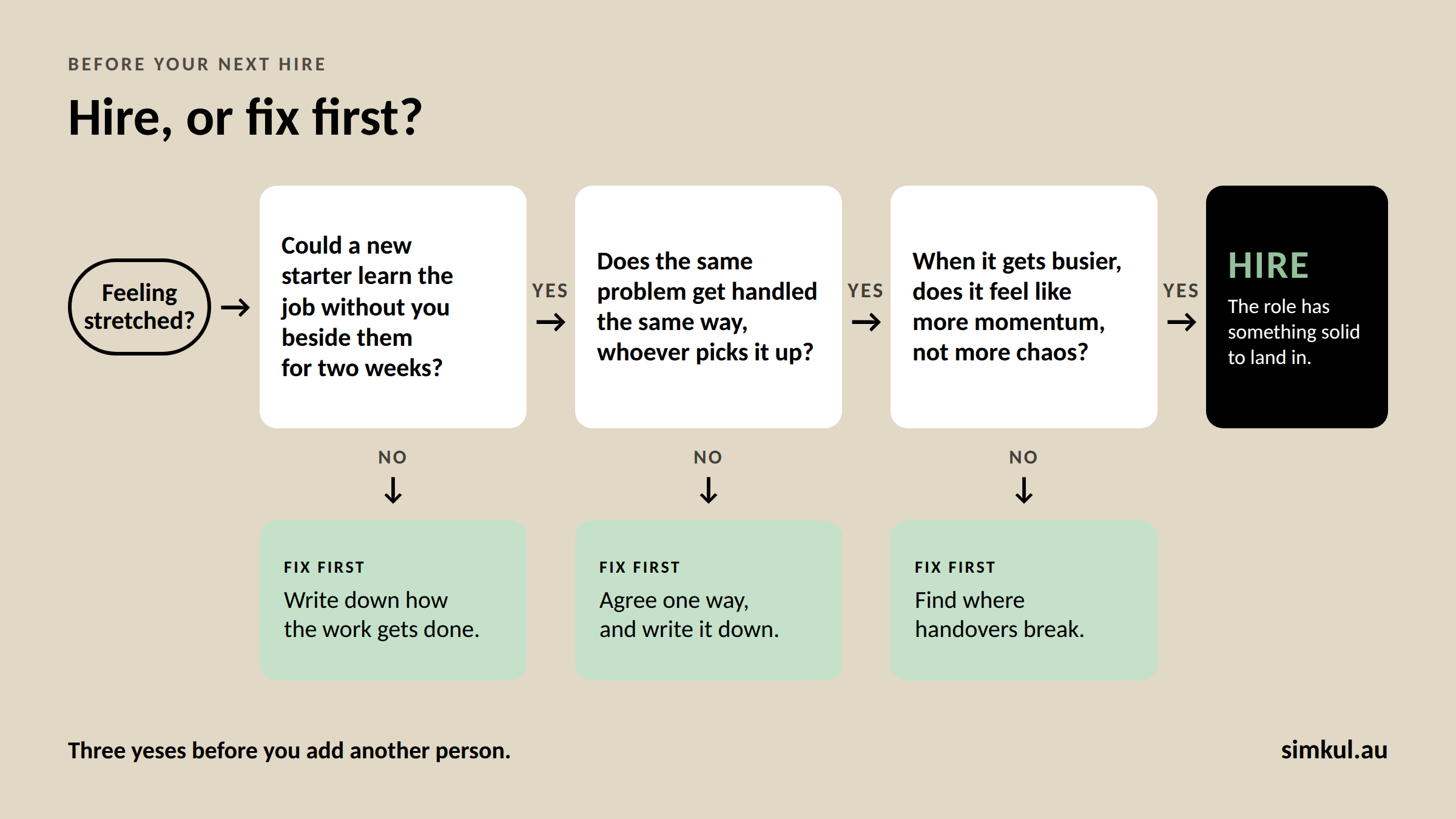
Every new hire needs you personally to make sense of the job
If onboarding means sitting next to someone for two weeks explaining how things work, because none of it exists anywhere else, you don't have an onboarding problem. You have a business that only exists in your head. That doesn't scale past you, no matter how many people you add to the roster. And it means every new hire takes months to become useful, because they're waiting on you before they can move.
The same problem gets solved a different way every time
A complaint gets handled brilliantly by whoever happens to pick it up, and completely differently by whoever picks up the next one. Nobody's incompetent. There's just no agreed way to do it, so everyone's inventing their own. More staff means more versions of the same fix, not fewer problems, and customers notice the inconsistency even when your team doesn't.
Growth is adding stress faster than it's adding room to breathe
Revenue's up. So is everyone's blood pressure. If busier months feel like more chaos rather than more momentum, the systems underneath the business aren't keeping pace with what's coming through the door. Headcount can paper over that for a while. It doesn't fix it. Two more people managed the same way just means two more people who are also, eventually, overwhelmed.
What to check before the next hire
Spend a fortnight watching where things really break, not where you assume they do. Usually it's a handover, a decision only one person can make, or a process that lives in someone's head instead of on paper. Write down what you see, even the small stuff, because the small stuff is usually where the pattern shows up first. Fix that first. The next hire will land properly, into a role that's built for them, instead of propping up a gap that was never theirs to fix.
None of this means don't hire. It means work out first whether the gap is people or plumbing, because hiring into a business with no systems just multiplies the confusion by however many people you add. Fix the handovers, write down the decision that only lives in your head, and build the thing so it holds before you put more weight on it. Ready to explore your options? Start at simkul.au.